
Sex Offender Checks in Kern County
The California Megan's Law Website is the public starting point for Kern County sex offender records. The California Department of Justice manages the site and draws its data from the California Sex and Arson Registry, or CSAR. Searchers can use a known name or a place-based search, then narrow the results to Kern County. A match should be checked with more than a name. Compare the displayed image, age or date information, physical traits, address detail, and registering agency before drawing a conclusion.
The Kern County Sheriff's Office has a different role. Its Registration Unit registers and photographs qualifying sex, arson, and gang offenders who live in unincorporated Kern County. City residents may register with their city police agency. The public state website is therefore the broad search channel, while the registering agency is the best place to report a suspected error or ask about local registration duties. Neither source should be treated as a complete court or arrest file.
Search by place for community awareness, or by name when a specific person is known. A place search may reveal nearby public entries without proving who lives at a particular home. A name search may return more than one person. In both cases, open the full profile and compare several identifiers before relying on the result.
Kern Registry Disclosure Limits
California's public display is not the whole CSAR database. State law controls which facts may appear, and some people who must register are not subject to public disclosure. The site also limits offense information to crimes that require registration. An absent result does not prove that no registration duty exists, and a public profile does not describe every event in a person's criminal record.
The Megan's Law disclaimer says DOJ has not assessed the chance that a displayed person will commit another offense. Much of the data comes from registrants and local law enforcement, so an address or status can change before the public display catches up. Mistaken identity is possible when a search relies only on name, age, or address. Those limits make careful comparison essential.
Location detail also varies by what California law permits for that registration category. A map pin should be read as public registry information, not as a survey marker or live location. If an address appears inconsistent with other official facts, send a correction through DOJ or the agency that maintains the registration.
The California DOJ registry overview explains how CSAR supports both law enforcement and public access. Its history reaches back to California's 1947 registration law.
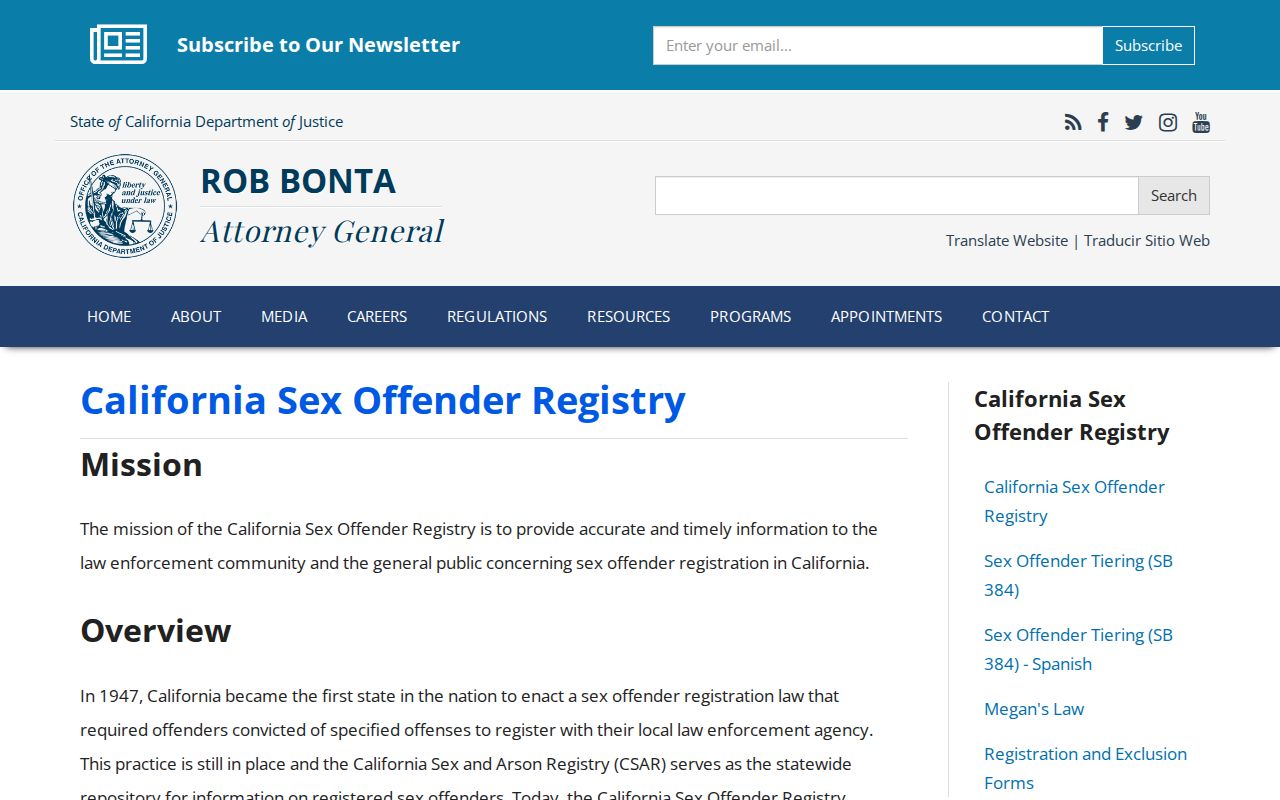
The state overview shows why the public website is one view into a larger law-enforcement registry, not a stand-alone Kern County case database.
How to Search the California Megan's Law Website
California DOJ requires each user to read and accept its terms before opening the search. A name search works best when the registrant is known. Address and map tools are better for neighborhood awareness. City, ZIP, and county filters can help focus a broad result set, although interface labels and map options can change. Keep the legal disclaimer in view while comparing results.
- Open the California Megan's Law Website, read the conditions, and accept them to enter.
- Choose a name search or use an address, map, city, ZIP, or Kern County filter.
- Compare possible matches by photo and physical details rather than relying on a name alone.
- Open the profile and review the offense, location detail, status, and registering agency.
| Field Label | Type | Required | Notes |
|---|---|---|---|
| Name search | Text | Depends on mode | Use a registrant name when known. |
| Address or map | Text/map | No | Looks near a place; current radius choices appear in the live tool. |
| City or ZIP | Text/filter | No | Narrows place-based results within a community. |
| County | Dropdown | No | Select Kern for county-focused results. |
| Disclaimer agreement | Button/control | Yes | Must be accepted before search access. |
The Megan's Law search entry puts the disclaimer before the search interface.
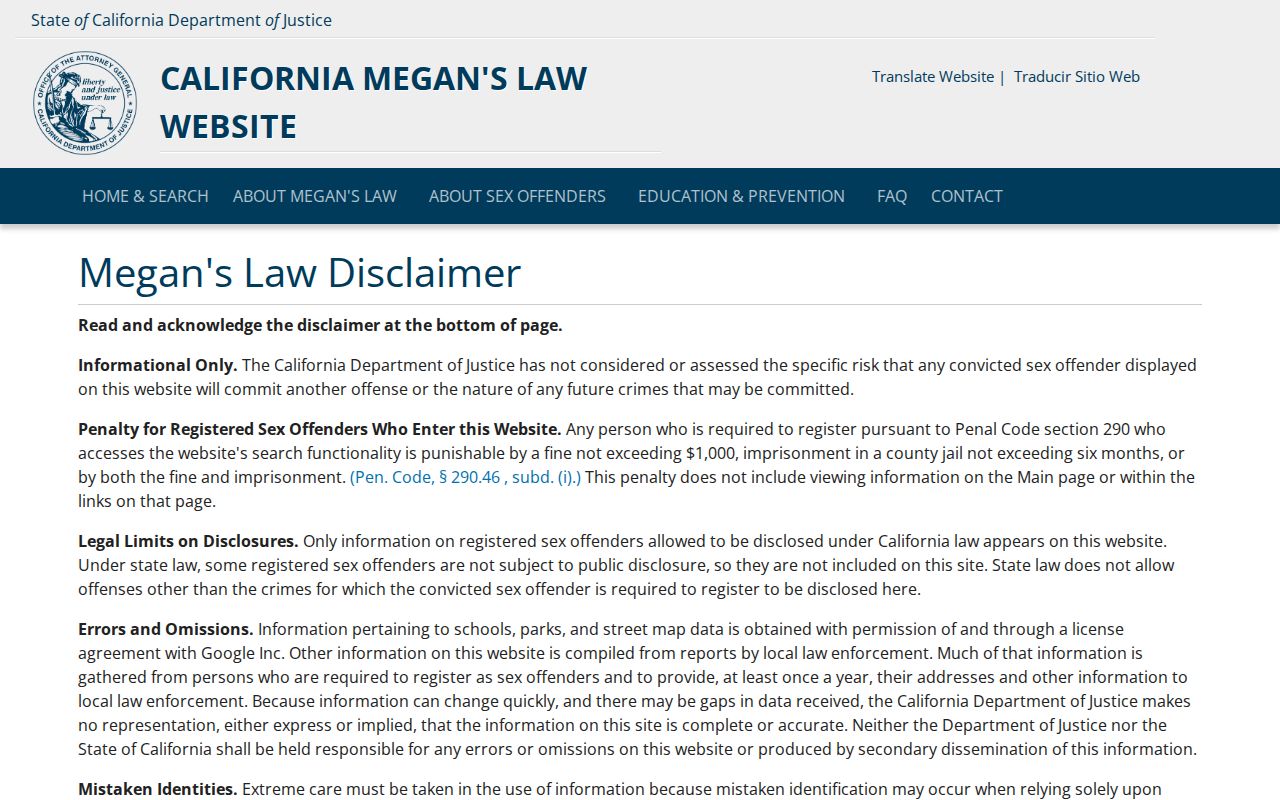
This entry screen reinforces that search results require context and may not be current or complete.
Kern Registration Unit Appointments
KCSO's Registration Unit is at 1415 Truxtun Avenue, Suite 100, in Bakersfield. It serves people living in unincorporated Kern County who must complete sex, arson, or gang registration. The unit also handles court-ordered bookings and fingerprints required by citations. Registration is by appointment only. Walk-ins are not accepted.
Public hours are Monday through Friday, 8:00 a.m. to noon and 1:00 p.m. to 4:30 p.m., with the last appointment at 3:30 p.m. Call 661-868-5547 or 661-868-4853. The after-hours line is 661-868-5555. Registrants inside an incorporated city may need the police agency responsible for that address, so the correct registering agency matters.
The KCSO Registration Unit page gives its current contact and appointment details.
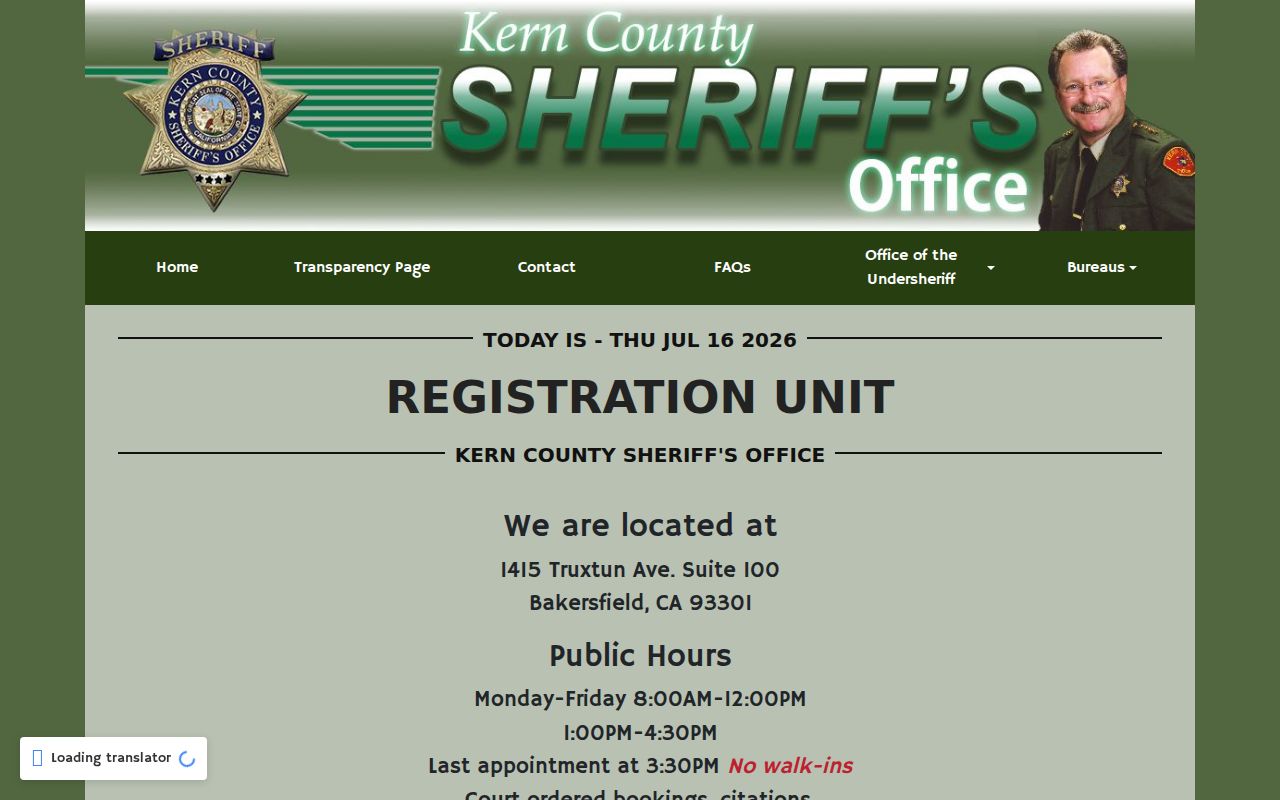
The unit page separates mandatory registration work from the public search conducted on California's statewide site.
Inside a Registry Profile
A public profile can contain several identifiers, but the exact display depends on California disclosure rules. Read all available fields together. A photo and physical description can help separate people with similar names. Address detail may be exact or less specific as the law permits. Offense data is limited to the conviction information tied to registration.
| Name & Aliases | Displayed identifying names when public disclosure permits. |
|---|---|
| Photo & Physical Description | May include age, sex, race, height, weight, hair, eyes, and identifying marks. |
| Registered Address | Address or location detail appears only at the level allowed by law. |
| Offense & Statute | Registration offense, code, conviction date, or jurisdiction may appear. |
| Level / Tier | Tier or risk information may appear or be available from the registering agency. |
| Registration Status | Compliance, update, or registering-agency information may be shown. |
Other possible fields include scars, marks, tattoos, vehicles, and a last-updated date. Non-registration offenses cannot be disclosed through this website. For the underlying Kern County criminal case, use the court record rather than inferring facts from the profile.
Correcting Kern Registry Errors
Wrong data should be reported to a police or sheriff's department or to MegansLaw@doj.ca.gov. Include enough detail for the agency to locate the entry, but do not use the public profile as proof of identity. Address and map information can shift quickly. The California disclaimer specifically warns that its data may be incomplete or inaccurate.
Tier questions follow a separate route. A registrant can request tier status from the agency where registration occurs, and the tier notification letter states the assigned tier. A person must keep registering unless a petition is filed and a judge grants relief. The passage of a minimum period does not end the duty by itself.
The KCSO Megan's Law information page connects local residents with the public safety process.
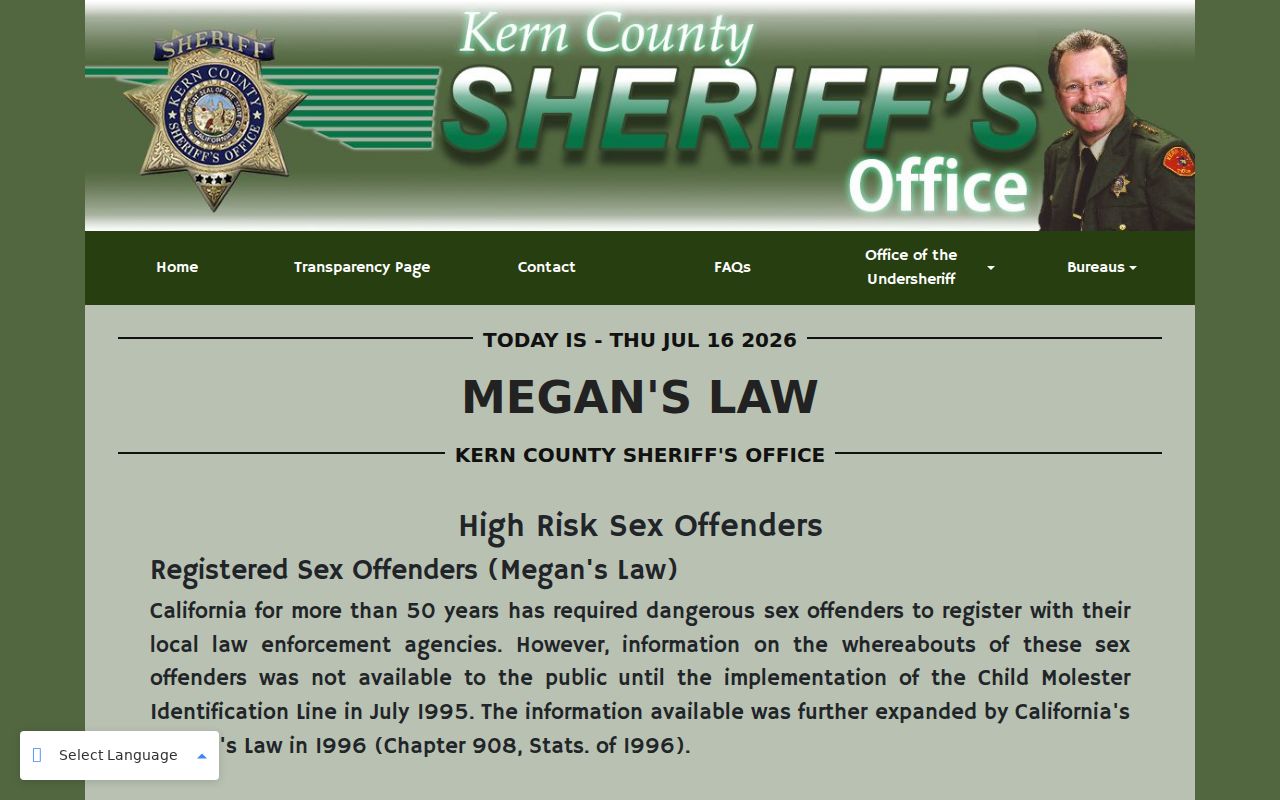
Local guidance complements, but does not replace, the DOJ website and the registering agency's official file.
California Registration Levels and Requirements
California uses tiers to set the minimum period before a person may seek relief. The tier depends on the conviction, risk assessment, and other statutory factors. These periods are not automatic expiration dates. Registration continues until a court grants a valid petition, where relief is available.
| Level / Tier | Minimum Period | Public Note |
|---|---|---|
| Tier 1 | 10 years | Possible relief petition after the minimum period. |
| Tier 2 | 20 years | A narrow 10-year exception may apply to some people under 21 at the offense. |
| Tier 3 | 20 years or life | Twenty years if based only on risk level; otherwise lifetime. |
| Juvenile tiers | Generally 5 to 10 years | Different rules apply to juvenile registration. |
Verification frequency was not stated in the project research and should be confirmed with the responsible registering agency. KCSO's appointment system applies to its unincorporated-area registrants, while city police agencies manage their own registration contacts.
California Courts explains that tier relief requires a petition and judicial approval. The registering law-enforcement agency issues the tier notification letter and can provide tier status. A public searcher should not calculate an end date from a conviction date because tolling, later events, risk findings, and other statutory rules may affect eligibility.
Kern Searches Beyond California
The National Sex Offender Public Website, or NSOPW, adds a cross-state search layer. It is useful when a known address history crosses state lines or when a neighborhood search near a county border needs broader coverage. NSOPW does not replace California's legal warnings, disclosure rules, or local registration office.
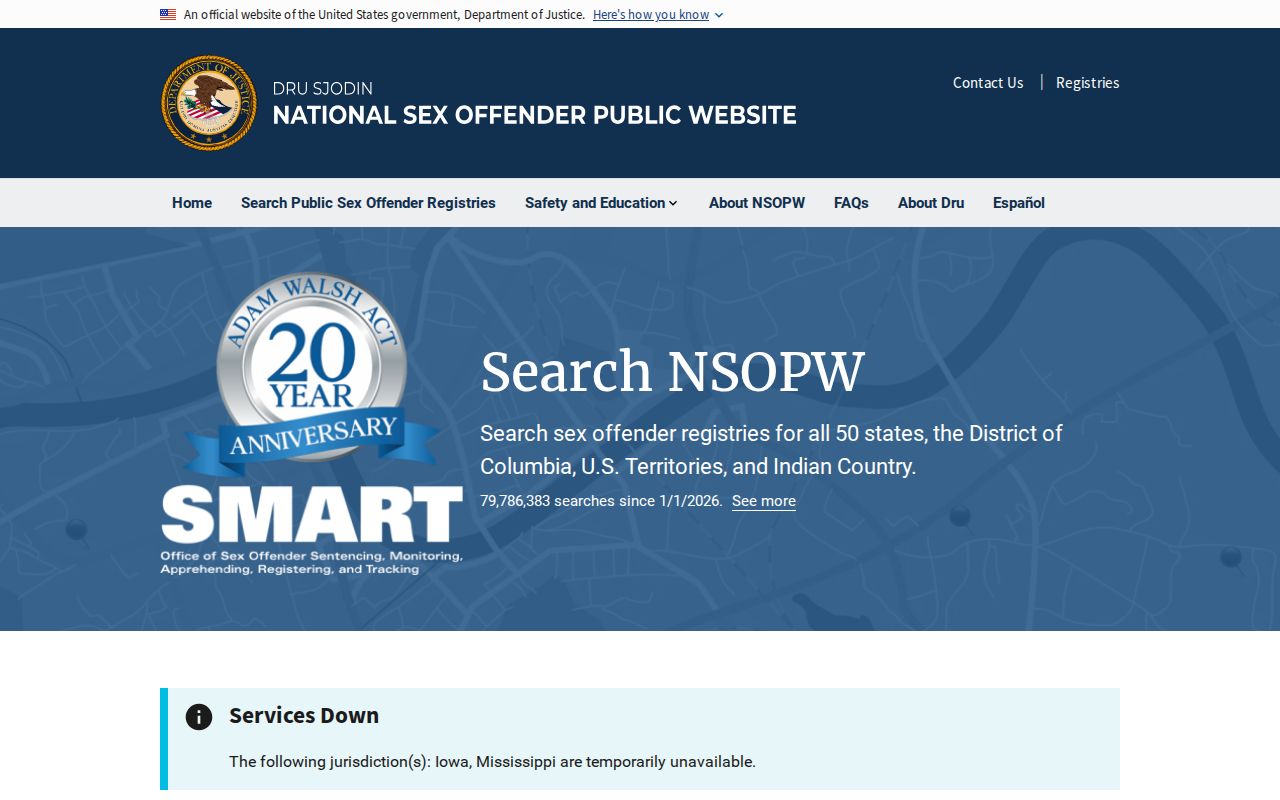
The national portal widens the geographic sweep, while the California and Kern County channels remain authoritative for local duties and corrections.
Community Notification and Lawful Use
Registry information is published for public protection and informed safety planning. It may help a household understand a neighborhood search result, but it is not a prediction of future conduct. Review the state disclaimer, verify identity, and report errors through official channels. Never contact, threaten, or confront a person based on a search result.
Misuse can carry penalties: Penal Code section 290.46(j) allows criminal prosecution and civil liability when registry information is used to commit a crime or harass a registrant or family member.
The California Legislature's Penal Code section 290.46 is the controlling public-disclosure and misuse statute.
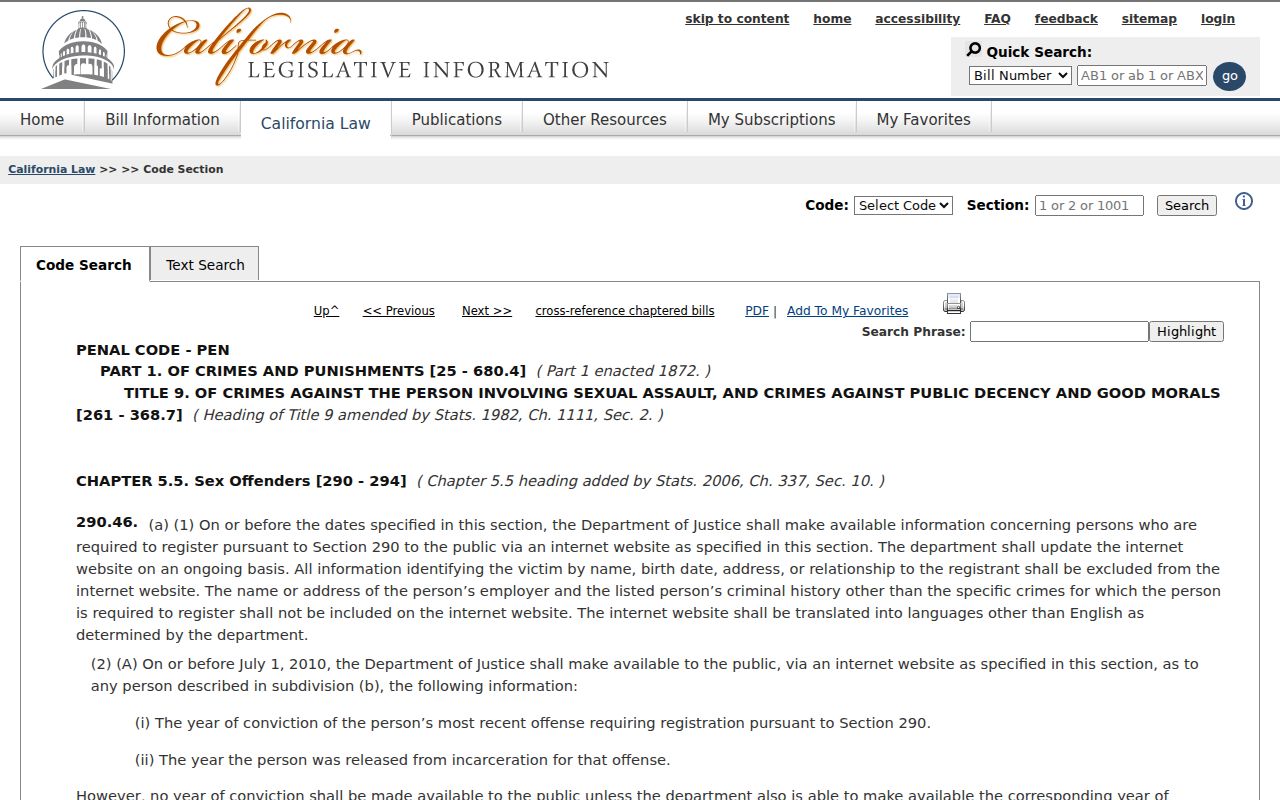
The statute defines both the public access framework and the limits that apply after a Kern County search.